
Water heaters work quietly in the background, delivering hot water day after day with very little attention. Because they’re tucked away in basements, closets, or utility rooms, many problems develop out of sight. By the time symptoms are noticeable, damage or disruption is often already underway. Understanding the most common issues uncovered during professional inspections can help homeowners avoid sudden breakdowns and unexpected repairs.
Sediment Buildup That Slowly Reduces Performance
One of the most common issues found during water heater inspections is sediment buildup inside the tank. Over time, minerals naturally present in water settle at the bottom of the unit. This layer of sediment reduces heating efficiency and forces the system to work harder to deliver hot water.
As sediment thickens, it can cause uneven heating, strange noises, or longer recovery times. Left unchecked, buildup can lead to overheating, internal damage, and a shortened system lifespan—all without obvious early warning signs.
Worn Anode Rods That Leave Tanks Unprotected
Anode rods are designed to protect the inside of the water heater tank from corrosion. These rods attract corrosive elements in the water, preventing them from attacking the tank itself. During inspections, worn or depleted anode rods are frequently discovered.
Once the anode rod is exhausted, corrosion begins affecting the tank directly. This process happens silently and often goes unnoticed until leaks appear. Regular inspections help identify failing anode rods before corrosion causes irreversible damage.
Small Leaks That Turn Into Big Problems
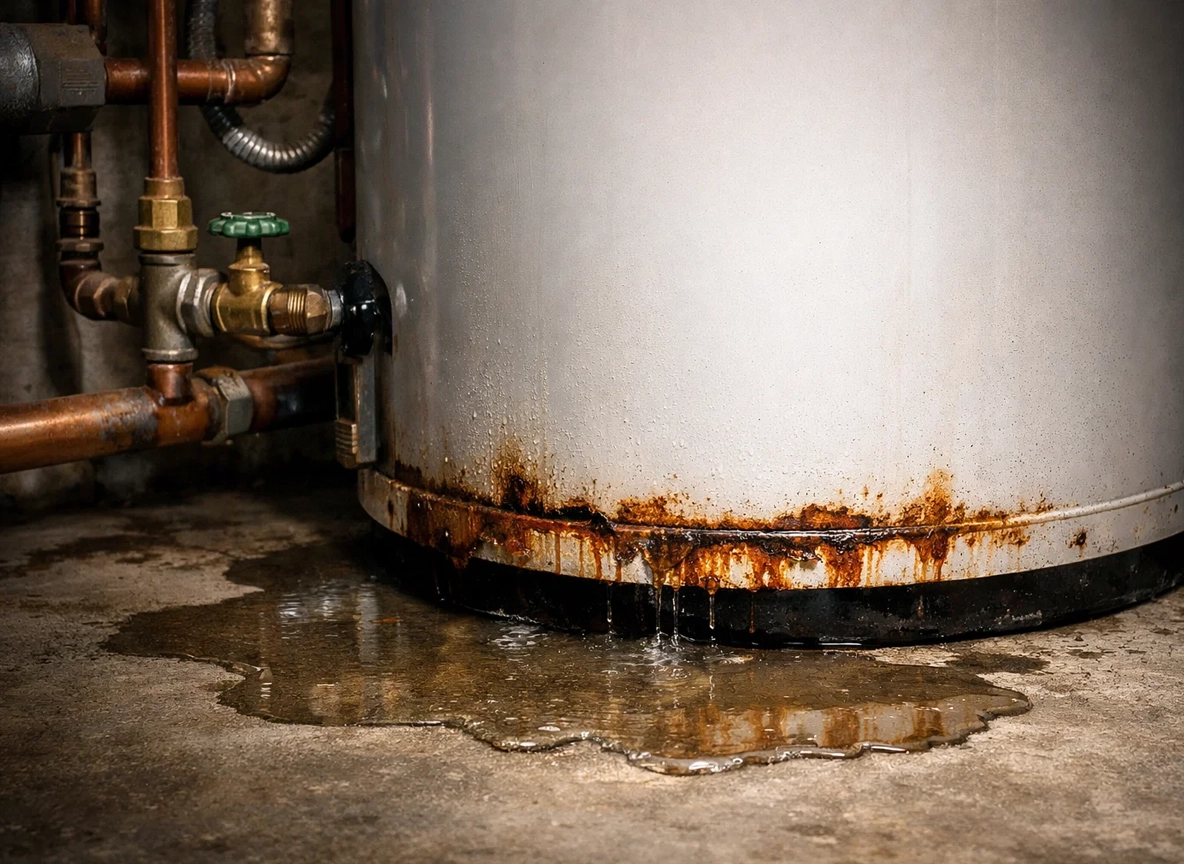
Minor leaks are another common issue found during professional evaluations. These leaks often occur at fittings, valves, or internal components and may not be immediately visible. Slow leaks can cause moisture damage, promote corrosion, and weaken surrounding materials over time.
Because leaks don’t always affect hot water availability right away, they’re easy to overlook. Early detection during inspections helps prevent water damage and reduces the risk of sudden tank failure.
Pressure and Temperature Issues Inside the Tank
Water heaters rely on proper pressure regulation to operate safely. Pressure relief valves are designed to release excess pressure, but during inspections, these components are sometimes found to be malfunctioning or improperly set.
Excess pressure places stress on internal components and the tank itself. Without proper regulation, this stress can shorten system life and increase the risk of leaks or failure. Inspections ensure safety components are functioning as intended.
Aging Components That Don’t Announce Failure
Heating elements, thermostats, and internal wiring all experience wear over time. These components may continue operating while gradually losing efficiency. During inspections, professionals often find parts nearing failure that haven’t yet caused noticeable issues.
Replacing or repairing aging components proactively helps maintain consistent performance and prevents inconvenient breakdowns. Waiting until a component fails usually means loss of hot water at the worst possible time.
Why Professional Inspections Make a Difference
Water heater inspections provide insight into issues that homeowners can’t easily see. Professional evaluations focus on internal condition, safety components, and performance trends that indicate future problems. Addressing these concerns early helps extend system life, improve efficiency, and reduce the likelihood of emergency repairs.
Water heaters may not warn you before trouble starts, but inspections reveal the signs. Contact Althoff Home Services today to schedule an appointment with our professionals. With expert water heater evaluations and reliable service, Althoff helps protect comfort and prevent costly surprises. Chicago’s Choice Since 1961—Hand It Off to Althoff!